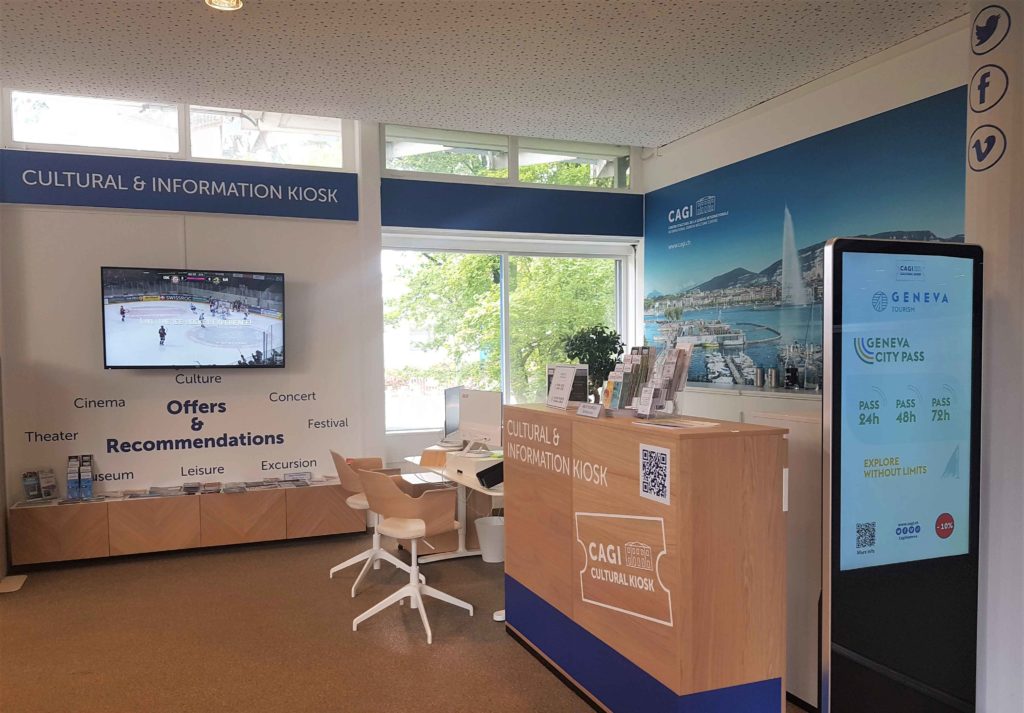
Cultural Kiosk at UN Geneva & CERN

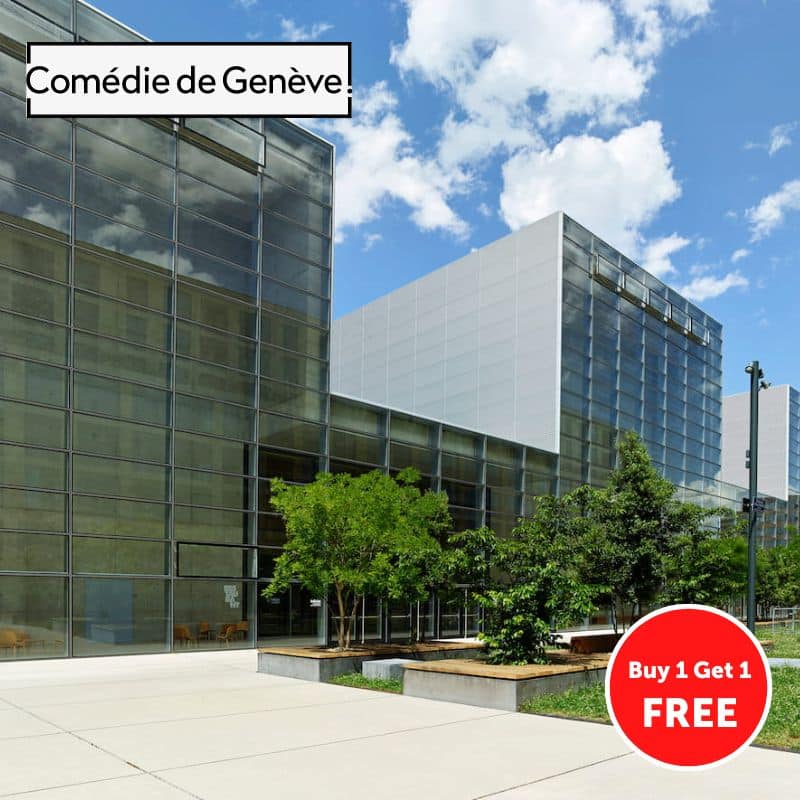
La Comédie de Genève

Season 2025-2026

  • With its new location in Eaux-Vives, the theater now boasts state-of-the-art rehearsal studios, along with dedicated workshops for set and costume design.
  • These enhancements elevate La Comédie to the level of a premier European production house, welcoming both Swiss and international artists.
  • This transformation marks a new chapter, expanding its creative reach and solidifying its role as a hub for world-class theatrical innovation.
  • Cyril Teste | Collectif MxM
  • Theatre
  • Grande salle
  • Duration 1h50

A young widow and debt-ridden heiress, Anna organises a party on her vast estate, as she does every year, to relieve boredom as much as to celebrate the end of an interminable winter.

Exacerbated by alcohol and the heat of summer, frustrations, desires and hopes come together and unravel. Around the figure of Micha, a melancholy and solitary misanthrope, the tensions between individuals whose relationships are poisoned by money, regret and misunderstanding are revived and revealed.
Following on from his production of The Seagull, Cyril Teste freely adapts Platonov, Chekhov’s over-the-top early play which, in terms of its themes and depth, foreshadows the whole of his future work.

Concentrating the action over the course of one night, from the reunion of the different characters until the early hours of the morning, Cyril Teste continues his work of hybridisation between cinema and theatre, plunging the audience into the heart of the party, tracing through the camera, in the labyrinth of bodies and faces, bursts of conversation and music, the paths of desire and solitude.

Check seats on the seating plan before contacting the kiosks

  • Joël Maillard
  • Theatre
  • Salle modulable
  • Duration approx. 3h (including intermissions)

You wake up in an airport.
You don’t know who you are or where you’re
going. You have two passports and a fingertip wipe in your bag.
You’re wearing a glittering tiara and your
makeup is like a stolen car.
You know every Enrico Macias song by heart.
You’re a rational girl. What do you do?

Double Nationality is a choral performance whose plot takes place inside a brain. That of a young woman, Rkvaa, a dual national in a crisis of identity indeterminacy, living alone with a potted basilisk, a stuffed mole, and uninterrupted thoughts that speak to her in the second person plural. Perfectly bilingual and a translator-interpreter, she sometimes works for the French police on drug trafficking and pimping cases. Furthermore, she’s vegan, a bit of an alcoholic, socially awkward, and sometimes imagines herself to be something she’s not, such as a princess or Salman Rushdie’s daughter.

After directing his own texts, writing for other artists, and even inventing his own (almost) stand-up routine, French-speaking director, actor, and author Joël Maillard is tackling a novel for the stage for the first time. To adapt this text by Nina Yargekov, which places the reader in the uncomfortable and troubling position of its main character, four actresses take to the stage, embodying the novel’s protagonist but also the chorus of contradictory thoughts that haunt her, along a journey shaped like an enigma, an investigation into identity and against identity, in all its form.

Check seats on the seating plan before contacting the kiosks

  • Pina Bausch | Boris Charmatz Tanztheater Wuppertal + Terrain
  • Dance
  • Grande salle
  • Duration approx. 2h30 (including intermissions)

Three pieces about desire, three ways of writing the coming together and going apart of bodies.

Boris Charmatz joins Pina Bausch’s iconic Café Müller (1978) with two pieces from his own repertoire. The bodies that relentlessly embrace and repel each other in Pina Bausch’s piece are matched by those separated in Aatt enen tionon (1996) and the intertwined duet from herses (une lente introduction) (1997).

With this triple programme, Tanztheater Wuppertal and Boris Charmatz offer a turbulent evening of colliding aesthetics, music by PJ Harvey and Purcell, bodies and ways of looking at dance.

Club Amour, instructions for use.

The Club Amour audience sees all three pieces. There are two times each evening.

Audiences at the first performance will first see Aatt enen tionon et herses, duo, followed by Café Müller.

Audiences at the second performance will see Café Müller first, followed by Aatt enen tionon et herses, duo.

For Aatt enen tionon et herses, duo, the audience is seated on the stage, standing or sitting on the floor. These 2 pieces contain complete nudity.

For Café Müller, the entire audience is seated in the auditorium.

Check seats on the seating plan before contacting the kiosks

  • Julie Deliquet, based on the book ‘La guerre n’a pas un visage de femme’ by Svetlana Alexievitch
  • Theatre
  • Grande salle
  • Duration approx. 2h

Forgotten, erased from the narratives of Russian memory, women nonetheless actively took part in the fighting of the Second World War – the Great Patriotic War, as it is known in Russia.

It is their voices, collected and woven together into a complex choral narrative by writer Svetlana Alexievitch (winner of the Nobel Prize for Literature in 2015), their stories and their memories that Julie Deliquet brings to the stage.

In a space that shows the multiplicity of temporalities, from the war to the present day via Soviet communal flats, the director brings together an all-female cast that brings together all generations, to make these stories heard and the way they resonate with the contemporary world, haunted by the return of war to Europe and the threat of Russian imperialism.

“I write not the history of war or of the State, but the history of men and women, thrown by their times into the epic depths of a colossal event.” – Svetlana Alexievitch

Check seats on the seating plan before contacting the kiosks

  • Mario Banushi
  • Musical theatre
  • Salle modulable
  • Duration 1h10

A neon restaurant sign on the outskirts of Tirana sheds light on the story of one family.

An unexpected incident that occurs under the light of this sign has a crucial effect on Mario’s life. Years later, as an adult, director Mario Banushi, who has travelled from Greece to Albania for years to meet his family and return to the family tavern, now transports that same sign from Tirana to Athens, placing it at the centre of the world he creates on stage.

In this creation, a cross between musical theatre and performance, the young artist Mario Banushi embraces his memories and nostalgia in order to cope with the absence of his recently deceased father, the cook and owner of the tavern who welcomed customers every evening. The paintings he creates, in an aesthetic that combines hallucination with the representation of everyday life, draw in the silence, the unspoken, the heart-rending contours of an absence and the silhouette of mourning.

Check seats on the seating plan before contacting the kiosks

  • Thomas Ostermeier
  • Teatre
  • Grande salle
  • Duration 1h30

Qui a tué mon père is not a question, but an indignant statement.
In this short, implacable text, Édouard Louis observes the premature exhaustion that marked his father’s body. Through a series of fragments and observations on his father’s life, he points to the collective and social responsibilities that have left their mark on his father’s body.

After adapting Histoire de la violence, Thomas Ostermeier has invited Édouard Louis to bring his text of anger, vengeance and infinite tenderness to the stage. The author’s presence on the stage brings his autobiographical and critical approach to the head, revealing the anger, the paradoxical tenderness and the need for him to speak out.

“You can no longer drive without endangering yourself, you can no longer drink alcohol, you can no longer shower or go to work without taking immense risks. You’re barely over fifty. You belong to that category of human beings to whom politics reserves an early death”. – Édouard Louis, Qui a tué mon père, Seuil, 2018

Check seats on the seating plan before contacting the kiosks

  • Laurène Marx
  • Teatre | Performance
  • Salle modulable
  • Duration 2h30

Pour un temps sois peu is a trans woman’s story told in detail, the dangerous details, the cruel details, but the real details told by someone who lived it, really lived it.

In her flesh and in her friendship. And not just another fantasised story written or performed by a cisgender person. Pour un temps sois peu is a manifesto, a reassertion of the intimate voice of trans people. An attempt to create more culture. More culture, not more fantasy.

In Pour un temps sois peu, a hard-hitting stand-up comedy, Laurène Marx tells the story of a trans woman’s journey and the violence that goes with it: the violence of all kinds of assignments and injunctions, of medical procedures, of constant aggression, of the processes of invisibilisation at work, of the discourses and rules of a profoundly heteronormative society. In a language born of rage and the urgent need to reclaim reality, Laurène Marx exposes her experiences, her intimacy and her history with force, laughter and anger.

Check seats on the seating plan before contacting the kiosks

  • Carolina Bianchi, Cara de Cavalo
  • Teatre | Performance
  • Grande salle
  • Duration approx. 3h30 (including intermissions)

In La Mariée and Bonne nuit Cendrillon, the first chapter of the Cadela Força Trilogy, Carolina Bianchi and the Cara de Cavalo collective brought to the stage reflections on the history of performance and theatricality alongside brutal stories of rape and feminicide.
Sexual trauma, the resurrection of past performances and the impact of a dose of GHB substitute – known as the rapist’s drug – administered by Carolina Bianchi on stage formed the tragic and radical itinerary of this first chapter in the form of a “Dantesque” journey.

In Brotherhood, the second chapter of the trilogy, artist and performer Carolina Bianchi examines the complexity of certain pacts of masculinity, the origins of brotherhood between men and the violent mutual codes that perpetuate rape and sexual violence as an integral part of their vocabulary.

Artist and performer Carolina Bianchi uses the principles of theatre to articulate possible avenues for this discussion, creating strong links between representation and real trauma, power structures in art and radical poetry, the origins of misogyny and sexuality in crisis. The structure of the show proves to be a trap, weakening Carolina Bianchi’s place as an author and transforming her into a character who suffers the consequences of having scrutinised the Brotherhood so closely.

Check seats on the seating plan before contacting the kiosks

  • Julian Vogel
  • Circus
  • Salle modulable
  • Duration 1h

It’s a crazy race to nowhere!

Julian Vogel, on his bike or roller skates, turns relentlessly around a circular track, chasing as much as he flees from a ceramic sphere that swings like a pendulum around the stage. On this circular stage, Julian Vogel puts on a circus of all kinds, performing the entire show on his own, constantly shifting between the music and the apparatus, the plates balancing and the ones breaking on the floor.

Maintaining constant suspense with simple elements straight out of the collective imagination of the classical circus, Julian Vogel writes CERAMIC CIRCUS like composing music, using loops, rhythm and counterpoint. The clatter of plates, the roll of drums and the feats become the elements of a virtuoso composition that traces its way along a ridge between feat and fragility, balance and clumsiness, calm and suspense.

Check seats on the seating plan before contacting the kiosks

  • Alice Laloy
  • Circus
  • Grande salle
  • Duration 1h20

It’s a uniformly grey world, governed by rules as precise as they are implacable, a competition without mercy. Two champions face each other, on either side of a ring in which avatars, humanoids with mechanical gestures executed on command, compete on their behalf in fiercely competitive events that are nonetheless strangely adapted from everyday life.

Somewhere between video games, visual arts, circus arts and puppetry, Alice Laloy creates a total, dystopian world. Virtuoso to the point of disturbance, the performers – acrobats, singers, contortionists, dancers – fascinate and worry at the same time, creating a space of confusion that questions the relationships of domination at work in our contemporary world, but also our capacity for revolt and change.

Check seats on the seating plan before contacting the kiosks

  • Camille Boitel & Sève Bernard | Compagnie L’immédiat
  • Duration: 1h10
  • français
  •  7+

It is a broken piece of which only fragments are visible, which the audience reconstructs as best they can. A piece full of holes, like the memory of something that is about to happen. An attempt to assassinate time. A study of rhythm. A declaration of love for the unpredictable, written with the precision of an accident.

To write the unexpected, so that the encounter between the theatre, the artists and the audience alone forms the show, Camille Boitel, Sève Bernard and four performers will arrive at the Comédie de Genève empty-handed. Gathering, salvaging and tinkering with whatever they find on site, they will construct the possibility of the immediate, working to undo the expectations of the performance in order to better open themselves, collectively, to the unknown.

Check seats on the seating plan before contacting the kiosks

  • Marion Duval
  • Theatre
  • Salle modulable
  • Duration 1h30

Just when you thought she’d been swallowed up by life, failures and complications, Marion Duval returns, ahead of schedule, better prepared to face her worst enemies and all the villains in the world, whom she can see through her invisible glasses.

Borrowing some of the major arguments put forward by Donna Haraway, Vinciane Despret and Baptiste Morizot, notably about cohabitation with other living beings and terror in the face of the end of the capitalist world, Marion Duval reinvents herself before your very eyes. But she never stops cutting the branch that supports her, or as a theatre critic would say, biting the hand that feeds her.

However, the artist rises above the traps set by her reading of things, runs the risk of becoming as hard as a rock, jumps into bottomless holes, unleashes the power of her sacred feminine in her fall, and finally envelops the audience in a new kind of free hug.

And then the magic happens: all you have to do is blink, and the stage is populated. Marion is no longer alone. A horde of extras has invaded the space and seems ready to turn heaven and earth upside down.

Check seats on the seating plan before contacting the kiosks
Special offer:
Buy 1, get 1 free (within show and ticket availability)
Ticket price: 40 CHF

Please specify in the form below at the section *order details* which play, date and time, and if required, seat number(s) and row.

Ticket order form (kiosk choice)

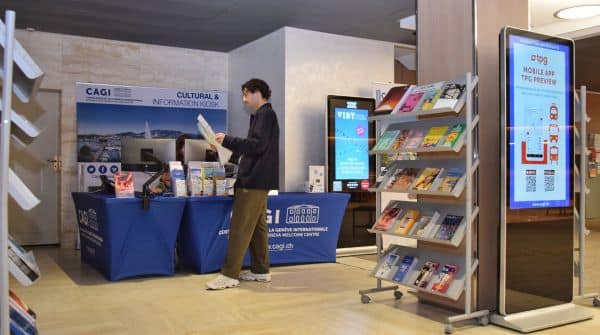
Choose your organization to be served by the relevant kiosk, either UN Geneva or CERN. A member of our team will contact you as soon as we receive your order. Thank you for your purchase !
No purchases possible on weekends.

"*" indicates required fields

Please enter a number from 0 to 20.
This field is hidden when viewing the form
Newsletter
This field is hidden when viewing the form
Preferred language for communication
Terms and conditions*

Share:

Contact

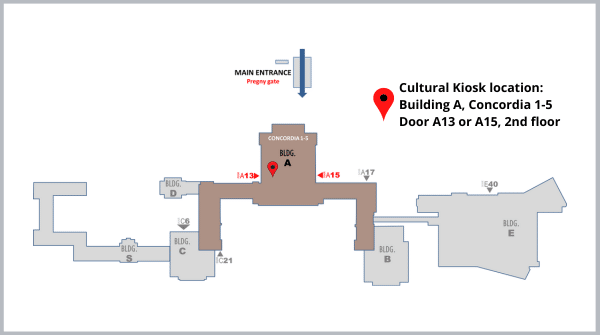
Building A, door A13/A15, level 2.

Mon. – Fri. : 10am-3pm, non-stop

info@kiosqueonu.ch 

  022 917 11 11

UN Geneva map

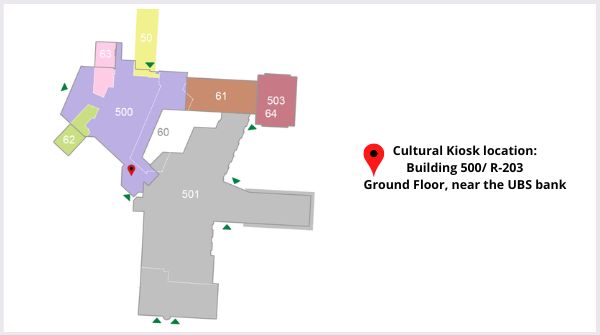
Building 500 / ground floor

Mon. to Fri. : 8:30am – 1:30pm (non-stop)

info@kiosquecern.ch   

022 766 94 76

CERN map

More opportunities

Events for everyone!